Valentine's Day is a holiday all about love and romance. Choosing a gift for a new girlfriend can be a bit tricky, especially if you have not whispered those three little words to each other yet. There are a variety of choices available that will show your new girlfriend that you are into her but still reflect a casual or new relationship.
Senin, 31 Oktober 2011

Unique Romantic Gift Idea for Men and Women
Unique Romantic Gift Idea for Men
A Personalized Message Printed on a Cup. When a warn and personalized message is printed on a cup, and when a cup is used by him to drink water or juices everyday, the message always appears in his eyes. He will think about you ... for sure. I received this unique gift myself, and it certainly made me feel very special.
Unique Romantic Gift Idea for Women
A Personalized Engraved Crystal. The personalized engraved crystal keep the best times of your life special and forever. It places any picture you provided and etched it in a beautiful and timeless crystal.
This unique gift used the latest generation of laser engraving technology to capture the important times of your life. Whether it a memorable family event or a special romantic moment, it creates a unique keepsake for all time.
a wonderful website for unique gift ideas
Don't know how to say it? Or can't find a way to say the words?
Whether you want to say "I Like You" to someone unique or tell the community what you think or take a position for, you can say it in fashion with a part of messageonanecklace.com Jewelry.
messageonanecklace.com has unique gift ideas and gives every young lady (or guy) to be able to communicate themselves with attractively generate 925 Sterling Gold Jewelry.
GREAT GIFT IDEA
You have lastly discovered a variety of that is both careful and significant. Ideal present for:
* Birthdays
* Events
* Phrases of Like
* Special Occasions
Whether you want to say "I Like You" to someone unique or tell the community what you think or take a position for, you can say it in fashion with a part of messageonanecklace.com Jewelry.
messageonanecklace.com has unique gift ideas and gives every young lady (or guy) to be able to communicate themselves with attractively generate 925 Sterling Gold Jewelry.
GREAT GIFT IDEA
You have lastly discovered a variety of that is both careful and significant. Ideal present for:
* Birthdays
* Events
* Phrases of Like
* Special Occasions
Diet, Nutrition and Food Myths

In the world of diet and nutrition, there may seem like there is an infinite amount of information out there. The thing is, a large portion of that information is bad, incorrect, or just plain stupid.
To help you avoid this type of information, here's a rundown of some of the most known and unknown diet, nutrition and food myths along with an explanation for why each is nothing more than a myth, or, in some cases, a flat out lie.
Here is the some myths about the Diet, Nutrition and Food
Eating fat makes you fat
- There is only one thing that makes a person fat, and that is eating more calories than their body requires. That's it. Nothing else causes weight gain other than eating too many total calories.
- So, for example, if your body requires 2500 calories per day to maintain your weight, you will gain weight if you eat more than 2500 calories per day on a regular basis.
- It doesn't matter if those calories come from fat, protein or carbs. Eating too much of anything will cause fat gain.
Fat is unhealthy, and therefore our diets should be as low in fat as possible
- If it wasn't for the fact that there are different types of fat, this myth may actually be true. However, since there actually ARE different types of fat, believing in this myth could actually be detrimental to your health.
- See, there are some fats (saturated and trans) that you certainly do want to limit somewhat (and in the case of trans, avoid altogether).
- But there are two types of fat that you should purposely be eating. This would of course be polyunsaturated and monounsaturated fat, also known as the "healthy fats." Found in foods such as nuts, seeds, fish, fish oil, olive oil, and flax seed oil, these types of fat provide a variety of health benefits and are an essential part of our diet.
- Avoiding them because of some silly "all fat is unhealthy" idea could actually be bad for you, rather than the other way around.
Carbs make you fat... and are most likely the devil!
- Oh boy, carbs... the official most confusing nutrient of them all. First of all, as previously mentioned during the "fat makes you fat" myth, the only thing that makes you fat is eating too many total calories. Carbs, fat, protein... it doesn't matter.
- French fries and cheese burgers or steamed broccoli and grilled salmon... it doesn't matter. If you eat more than your body needs, you gain weight no matter what it is. Simple as that.
- Then there's the whole "carb-aphobia" thing. Really, they're not so bad. In fact, they're a little like fat in that they have their own "good" and "bad" version. The good version would be complex carbs.
- This includes foods like oatmeal, brown rice, whole wheat bread, fruits, vegetables and other whole grains. The bad version would be simple carbs. This includes foods like white rice, white bread, soda, candy, chips and other processed junk food.
- So, for now on, if you want to call carbs the devil, at least add the word "simple" before "carbs," as it is simple carbs that cause all of the negative carb related effects. Complex carbs on the other hand are perfectly fine and should actually comprise most of your daily diet.
Eating after 6:00pm, or 7:00pm, or 8:00pm, or any time late at night is bad because the food will turn straight into fat
- This one is my favorite diet and nutrition myth of them all. Here's the thing, your body doesn't care what time of the day you eat. In fact, your body has no concept of time. It doesn't think "Hey, it's 8pm, time to start converting whatever food gets eaten from this point on into fat!"
- In terms of fat/weight control, your body knows one thing and one thing only, total calories. If you give your body more calories than it needs, it will store those extra calories as body fat. The time of the day that you eat plays absolutely no role in this. To your body, 300 calories eaten at 10am are exactly the same as 300 calories eaten at 10pm.
- So, eat as early or as late as you want. As long as your total calorie intake for the day is what it should be, the time of the day that you eat those calories means absolutely nothing.
Certain foods (grapefruit, cabbage soup, etc.) can actually burn fat
- If the above myth is my favorite, this one gets second place. Just like no specific food makes you gain fat, no specific food makes you burn fat. All of this grapefruit diet and cabbage soup diet stuff is all nonsense that should be either laughed at or ignored.
- If you want to lose fat, you have to give your body less calories than it needs, ideally about 500 calories below maintenance level each day.
- So, if your body needs 2500 calories each day to stay at your current weight, you will lose weight by eating 2000 calories per day. Your other option to lose weight would be by exercising so that you are burning extra calories. Or, for best results, a combination of both.
- Now that you know will work, here's what won't work. Eating "magic" foods that "magically" burn fat.
If my food label says 0 grams of trans fat, then it has absolutely no trans fat
- Your food label is lying to you. It may say your food contains 0 grams of trans fat per serving yet it may actually contain 0.4 grams. Here's why. The FDA's trans fat labeling rule states that food companies only need to mention trans fat IF and ONLY IF their food contains 0.5 grams of trans fat or more per serving. If it contains exactly 0.499999, they are allowed to print "Trans fat: 0 grams" on their food label.
- Yes, this is indeed dumb and wrong in every possible way. Now, if you're thinking that slightly under half a gram of trans fat doesn't seem like much, here's what I have to tell you. First, ANY amount of trans fat is too much. Second, this is only per serving. If you eat a few servings of whatever this food is, all of a sudden you are eating a few grams of trans fat without even knowing it.
- Fortunately though, there is a way to know it. That way is by checking the ingredients. If you see the word "hydrogenated" (or "partially hydrogenated") or "shortening," then that food contains some amount of trans fat whether the label says so or not.
100% whole wheat bread is always healthy and is always 100% whole wheat
- Throughout a Calorie Counter, whenever I mention anything about complex carbs (aka "good carbs") one of the foods I mention as an example is 100% whole wheat bread. The only problem is this requires a little more of an explanation to truly make sure that you are actually eating whole wheat bread.
- As it turns out, some "100% whole wheat" breads are lying. They are nothing more than, at best, slightly improved versions of white bread. Others contain other junk that you don't want your whole wheat bread to have.
- Luckily though, just like catching the aforementioned trans fat lie on your food label, there is a similar way to verify if you are indeed eating a healthy legit 100% whole wheat bread.
- In the ingredients on the food label, here is what you should be looking for. First and foremost, the #1 ingredient on that list should be something with the words "Whole Wheat" in it.
- Some examples include "Whole Wheat Flour" and "Stone Ground Whole Wheat Flour." Next up, you should NOT see the words "Unbleached" or "Enriched" anywhere in the list in any form.
Do You Feel Depressed After Sex? - You are Not Alone
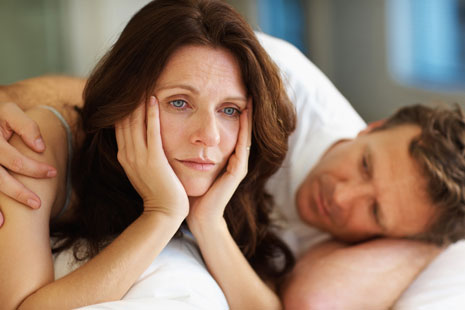
Feelings of relaxation, the release of tension, and a sensation of bliss are the feelings some people experience after sex. But for others the afterglow of sex is not only absent but replaced with feelings of depression. How common is depression after sex? And more so, what can cause an individual to feel sadness instead of positive emotions following sexual intimacy? In this post we are going to explore the answers to these questions about what researchers are calling postcoital dysphoria (feelings of melancholy, tearfulness, anxiety, irritability, and sadness after sexual intercourse).
There are many psychological reasons why someone might feel negative emotions after sexual relations including
- Post –traumatic stress disorder related to prior sexual abuse.
- Having sex when you really don’t want to or when you are not emotionally or physically ready.
- Having sexual relations with someone who is abusive.
- Low self esteem about your body image or sexual performance.
- Fears that once the sex is over that your partner will leave or reject you.
- Fear that your relationship is moving too fast.
- Guilt or shame due to conflicting values, religious beliefs, or attitudes about sex.
- Feeling emotionally distant from your partner or experiencing conflict within the relationship.
The researchers found some correlation between childhood sexual abuse and lifetime postcoital dysphoria (PCD) but not for those reporting PCD within the previous four weeks. The study authors concluded that “biological predisposition” might play a bigger role in causing sadness after sex than other factors.
Doctor Friedman,a psychiatrist at New-York Presbyterian Hospital and Professor of Clinical Psychiatry at Weil Cornell Medical College, describes patients who would come in to be treated for intense depression following sexual intercourse. These patients would report that their postcoital depression usually lasted for several hours or more. Yet when Friedman tried to find a psychological reason for this phenomenon, he could find none. He began to speculate that perhaps this plummet in mood following sex was more due to neurobiological causes than psychological ones for some of his patients. He further theorized that if the individual had a particularly intense orgasm that the physiological fall from an elevated state of pleasure could potentially induce depression.
Senin, 24 Oktober 2011
How To Avoid & Deal With 5 Common Travel Diseases
While traveling, your body is introduced to many new bugs and bacterias, some of which are more dangerous than others – so today we are going to share 5 common travel diseases, what they are, how to avoid them.
Note - Please remember, this post is not meant to scare you but remind you to take precautions so you can travel safe and happy.
1. Malaria

What - Malaria is a serious disease caused by parasites. It’s fatal if left untreated.
How - Malaria is transmitted by a bite from a malaria-infected female mosquito.
Where?
- More than 100 countries are in the danger zones of Malaria (India, Central and South America, SE Asia, Middle East and sub-Saharan Africa).
- Sometimes it can be difficult knowing how bad the malaria is in some places, and it differs between what every doctor says as well.
- One doctor advised me to take malaria pills in Malaysia but not in Vanuatu, another said I didn’t need them for any of the countries, which can make it a tricky decision since the side effects of the pill are really horrible and you don’t want to take them when you don’t need them.
Prevention
- There are several different Anti-malarial drugs to prevent and treat Malaria. The choice of which drug to use depends on side effects, the malaria type and which drugs the parasite is resistant to in that area, so make sure that you get the appropriate drug for your situation and destination.
- Malaria pills aren’t 100% effective, so to be extra safe, sleep under a mosquito net, use insect repellents (make sure it has DEET) and wear long pants and shirts in the evening or when walking in places with a lot of mosquitoes.
Side Effects:
- The side effect of taking malaria pills can sometimes feel just as bad as having malaria, so my suggestion is to take the drugs ONLY if you really know that there will be malaria where you go.
2. Travelers Diarrhea

What? - Travelers diarrhea is exactly what it sounds like – frequent diarrhea.
How? - A foreign bacteria or bug enters your system, most often from contaminated food and water.Many travelers also get upset stomachs because of the sudden diet change. Spicy food often causes an irritated bowel and you get diarrhea. When this happens, stay hydrated and don’t eat any spicy food.
Where?
- It can happen anywhere, but the risk is higher in developing countries in Africa, Middle East, Asia and Latin America.
- Prevention:
- Always drink bottled water, don’t even brush your teeth in tap water if it’s not drinkable, and keep your mouth closed when showering.
- If you’re unsure whether the ice is from tap water or bottled water, don’t risk it but ask for no ice in your drink.
- Stick to cooked food, especially make sure that the meat is well cooked. Other food to be careful with is fruit (preferably peel it yourself) and seafood.
- Always carry a disinfection gel around and wash your hands with it a few times a day, especially before eating and after having dealt with money.
Treatment:
- If the damage is already done, then the best way to stop it is to have Imodium and Pepto-Bismol to stop it. If the diarrhea doesn’t go away and/or gets worse, seek a doctor.
- It’s better to be safe than sorry, and your doctor can give you advice on what to eat and the local remedies for diarrhea.
3. Cholera

What? - Cholera is a severe bacterial disease affecting the intestines, creating vomiting and watery diarrhea.The disease is fatal if left untreated. It’s an extreme type of travel diarrhea.
How? - The germ is spread by drinking contaminated water or infected food. The source of the contaminated water is often due to other cholera patients’ diarrhea let through into the waterways.
Remember that even shellfish living in affected waterways can cause this infection.
Where?
- This disease can be found in Indonesia, Asia, Africa and Eastern Europe.
- Prevention:
- There is a drinkable vaccine (Dukoral), two doses will keep you safe for two years (with the second dose taken a week after the first). Use the same precautions as for normal Travel Diarrhea.
4. Hepatitis A & B

What? - Both Hepatitis A and B are viral infections of the liver, however Hepatitis B is transmitted differently and it takes longer to get well.
How?
- The most common transmission for hepatitis A is via contaminated food and water. The virus breaks down in the discharge and spread via contaminated water that people drink, as well as food that has been in contact with contaminated water.
- Often you don’t notice that you’re infected because there are little to no symptoms and the symptoms can come a long time after you’ve been infected (Hepatitis A 2-6 weeks, Hepatitis B 2-6 months), but the symptoms can also make you feel sick for months. Typical symptoms are nausea, fever, malaise and abdominal problems.
- Hepatitis B is transmitted via blood – blood transfusions or needles - and sex with an infected person.
Where? - Most common in less developed countries and regions with poor hygiene standards. Africa, Southern Asia and Latin America are common places, but it exists everywhere.
Prevention:
- Vaccinations are 95-100% effective when taken at least 4 weeks prior to trip. A second vaccine (Havrix) boost 6-12 months later and then it lasts for the next 20+ years. There is a vaccination that covers for both hepatitis A and B called Twinrix.
- This one has to be taken 3 times for 20 years of coverage: The second one 1 month after the first, and the third one 6 months after the first dose.
5. Typhoid Fever

What? - A bacterial infection in the intestines, and sometimes the bloodstream.
How? - It’s transmitted by contaminated food or water with salmonella. Typical symptoms are severe headache, nausea, massive loss of appetite and fever.
Where? - It exists everywhere but the risks are highest in poor countries in Asia, Africa, Central and South America, as well as in the Indian subcontinents and Mexico.
Prevention:
- The vaccine is only between 50-80% safe so stay away from water that could be contaminated (like tap water) and uncooked food. Take the vaccine two weeks before travel.
- Well, there you go – not the nicest article to read I know, but it is important to educate yourself on what is out there, so you are prepared while traveling.
Oat Meals - Health Benefits and Facts
Oats and oatmeal, have been a part of human food for at least 3,000 years.Oats were probably eaten accidentally to begin with as a weed growing in wheat or other grain crops for quite some time before coming into its own. Only five percent of oats grown world wide are used for human food. The rest is mostly used to feed horses and poultry with some used in cosmetics and medicinally, mostly in alternative medicine.
With all the benefits of eating oats, you’ve probably heard that eating oatmeal can lower your cholesterol, but this common, even lowly grain can do a lot more than that.
Health Benefits and Facts of Oat Meals
With all the benefits of eating oats, you’ve probably heard that eating oatmeal can lower your cholesterol, but this common, even lowly grain can do a lot more than that.
Health Benefits and Facts of Oat Meals
- It contains more soluble fiber than other grains, which is why it works to lower your cholesterol. It slows the reabsorption of bile which makes your liver have to get the cholesterol it needs from your blood instead of bringing more in from the food you eat.
- This water soluble fiber also keeps you full longer since once it’s dissolved in the liquid in your system, it becomes a thick gel like fluid which moves slowly through the digestive tract.
- Since it moves so slowly it slows the absorption of glucose and that means you won’t get a sugar high and then a sugar low.
- Because of these properties, oatmeal is useful in treating high cholesterol, diabetes and obesity.
- Outside the body, oatmeal soothes itching and irritated skin by lowering localized inflammation. A warm bath with a cup of pulverized oatmeal added to the water will calm and nurture your skin. Eczema, sunburn, psoriasis, chickenpox and measles respond well to this treatment.
- It’s a gentle exfoliant for your face and body and helps even out complexions because of its anti-inflammatory properties.
- It’s warming and soothing in a foot bath to help care for chronically cold or tired feet.
- Oatmeal neutralizes odors so a small bowl of it in the refrigerator will help keep it fresh.
- If you have old oatmeal and don’t want to eat it, use it to absorb oil and grease spots in the garage or driveway. Use it generously, let it set for an hour or so then clean it up.
- Oats are usually overlooked as a source of good food and skin treatment. As an inexpensive product, oatmeal could be beneficially added to food and beauty treatments by anyone.
Langganan:
Postingan (Atom)